Estos días he vivido una historia de angustia y miedo. Soy personal de salud mental. Estoy haciendo mi residencia en uno de los institutos y hospitales de alta especialidad a nivel federal. Llevo años formándome como especialista y pensé que ya lo había escuchado casi todo. Me había tocado, antes de la pandemia, escuchar de situaciones tan difíciles que parecen increíbles. Cosas como de película. Pero nada como lo de estos días.
En estas semanas me ha tocado dar intervención psicológica y emocional a pacientes que han perdido a su familia entera. A integrantes de una familia en la que solo han sobrevivido dos y no pueden estar juntos por el aislamiento obligado que deben cumplir.
Me tocó darle apoyo a un paciente que dieron de alta en el hospital. Estaba solo en su casa porque toda su familia contrajo el virus y todos estaban hospitalizados en diferentes instituciones. Su hermano menor murió.
Le dieron la noticia por teléfono desde el hospital. Después me llamaron para ver si podía brindarle apoyo. Lo llamé. La mayoría de las intervenciones con familiares o pacientes se hacen vía telefónica por la restricción de aislamiento. Eso lo hace más complejo.
Las intervenciones que hacemos en situación normal son presenciales porque trabajamos mucho con el lenguaje no verbal. Acá el reto es cómo manejas las emociones de los afectados solo por teléfono.
(Samuel Hernández, 30 años. Residente de Psiquiatría en un instituto nacional de salud)
El reto es grande porque no solo implica que han perdido a un familiar o a varios. Es que muchos no se van a poder despedir. No van a tener un ritual funerario y entierro que es fundamental para la elaboración del duelo.
Lo que hacemos es escucharlos, validar sus emociones, plantearles formas de despedirse: como redactar una carta para la persona, poner en ella todo lo que tienen que decir y después quemarla.
Al principio me daba mucha angustia esperar las llamadas. Decía: ahora qué voy a escuchar. Ahora ya estoy más tranquilo. Pero es difícil, porque es estar lidiando con una avalancha de cosas. Las malas noticias llegan una tras otra tras otra.
Hay también muchos compañeros infectados, porque sí hacemos intervenciones personales cuando los pacientes están en una situación tan crítica que la atención no puede ser telefónica. Vamos además al hospital dos veces por semana a tener sesiones grupales de contención con los médicos y enfermeras.
La semana pasada varios compañeros resultaron positivos. Sí da miedo contagiarse. Me levanto cada día pensando si ya estaré infectado, y solo me queda esperar que si es así no me vaya tan mal.
Lo otro que es muy difícil es no ver a la familia. Desde que esto empezó no he visto a mi hermana, que también es médico, ni a mi mamá. Solo hablamos por videollamada y también a ella trato de darle contención. Le digo que todo está bien y que todo va a estar bien.
Pero sé que no vamos a regresar pronto a la misma forma de vida como la conocíamos antes. Hay riesgo de rebrotes. Esto va a tardar. Debemos estar preparados. Pero también concentramos en el aquí y el ahora. Yo pienso que mi familia está bien, que no se han enfermado y eso ya es bastante.
Fuente: https://www.animalpolitico.com/coronavirus-testimonios-historias/testimonio/residente-psiquiatria
Saturday, May 30, 2020
Sunday, May 24, 2020
Friday, May 22, 2020
Sunday, May 17, 2020

Sunday, May 3, 2020


Saturday, May 2, 2020

Saturday, February 15, 2020

Friday, January 10, 2020
184 Morir es un alivio
“Morir es un alivio”: 33 exnarcos
explican por qué fracasa la guerra contra la droga
Soy
del norte de México, una de las regiones más afectadas por la violencia del
narco durante la guerra contra el narcotráfico. Entre 2008-2012 mi ciudad vivió
una de las épocas más inciertas y violentas en su historia. Las balaceras,
enfrentamientos entre cárteles y militares, que empezaron como acontecimientos
esporádicos, terminaron siendo eventos frecuentes. Sucedían a plena luz del día
y en cualquier lugar de la ciudad. A mí me tocó presenciar un tiroteo justo a
un costado de la universidad donde daba clases. Tuvimos que cerrar las puertas
y aplicar el protocolo de seguridad diseñado para enfrentar estos eventos. Mis
amigos y familiares vivieron experiencias similares. Algunos fueron testigos de
las balaceras desde sus automóviles y otros desde sus casas.
Junto
con la creciente violencia, el cártel de Los Zetas empezó a extorsionar a los
negocios locales. Si no pagaban su “derecho de piso”, atacaban su negocio o les
secuestraban a algún familiar.
Poco
a poco los negocios fueron cerrando y la paranoia aumentó debido a los mensajes
que los narcos mandaban por redes sociales: “Esta noche no salgan porque va a
haber balazos”. Algunas veces estas amenazas resultaban ciertas.
En
este contexto decidí estudiar un posgrado en el extranjero. No quería continuar
mis estudios en medio de tanta inseguridad, por lo que viajé a Inglaterra. Es
aquí donde surge mi interés académico por la violencia del narcotráfico.
Gracias al consejo de una de mis profesoras, canalicé mi frustración contra las
políticas de seguridad de Felipe Calderón, presidente del país entre 2006 y
2012, a través de mi tesis de máster. Llevo siete años estudiando el tema.
33
biografías de narcotraficantes
Mi
tesis doctoral se enfoca en estudiar la violencia del narcotráfico a través del
análisis de historias de vida.
Entre
octubre de 2014 y enero de 2015 entrevisté a 33 hombres que trabajaron en el
narco. Abordamos temas como su niñez y adolescencia, alcoholismo, drogas,
vandalismo, su incursión y papel en el narco. Con el fin de entender el impacto
de estas experiencias personales en la incursión de los participantes en el
narcotráfico, estudié sus narrativas desde un punto de vista discursivo.
Por
las características de mi estudio, su contribución es de dos tipos. Primero,
metodológicamente, entrevistar a narcos de primera fuente es algo inédito en el
mundo académico. Hasta la fecha no hay otro estudio que haya recopilado más de
30 entrevistas a exmiembros del narco. En términos académicos el estudio pone
sobre la mesa una perspectiva que ha sido ignorada por investigadores,
funcionarios públicos y políticos: la de los perpetradores. En este sentido, el
análisis de la narración de sus vidas arroja luz sobre las posibles causas de
su entrada en el narco y explica la lógica con la que entienden el mundo.
Comprender ello es clave no solo para abordar un fenómeno complejo, sino para
diseñar políticas públicas y de seguridad. Hasta ahora, dichas políticas se
diseñan bajo la lógica de quienes las diseñan. No sorprende, entonces, su gran
fracaso.
Narcos:
ni monstruos ni víctimas
Para
empezar, hay que reconocer que los narcos son parte de nuestra sociedad. Están
expuestos a los mismos discursos, valores y tradiciones que todos nosotros. Uno
de los principales problemas en México es que el Gobierno sistemáticamente los
discrimina al reproducir el discurso binario estadounidense “ellos” y
“nosotros”, “buenos” y “malos”. Este discurso, además de ser absurdo en su
extrema simplicidad, opaca los múltiples matices que revelan las causas de esta
violencia.
El
análisis de las historias de vida de exnarcos arroja luz sobre dichos matices.
Los participantes no se ven ni como víctimas ni como monstruos. Ellos no
justifican su incorporación al narco como su “única opción” para sobrevivir,
como muchos estudios académicos aseguran. Reconocen que entraron al narco
porque, aun cuando la economía informal les permitía sobrevivir bien y mantener
a sus familias, ellos querían “más”.
Los
entrevistados tampoco se ven como criminales sanguinarios, como se les
representa en las películas. Los participantes se autodefinen como agentes
libres que decidieron trabajar en una industria ilegal, pero también se definen
como personas “desechables”.
Este
sentimiento de marginación, sumado a su problema de adicción a las drogas y la
falta de un propósito general de vida, hace que valoren poco sus vidas y que la
muerte, en cambio, sea vista como un alivio.
Este
es un tema clave a considerar en el diseño de políticas públicas. Una tarea
central es evitar que más niños y jóvenes se sientan desechables.
Mi
investigación revela cómo los participantes reproducen el discurso binario del
Gobierno. Se autodefinen como “ellos”, los marginados de la sociedad. No se consideran
“nosotros”, parte de la sociedad civil. También reproducen la ética
individualista que permea México desde la entrada del neoliberalismo a fines de
los 80. Esta ética es un arma de doble filo: no culpan al Estado o a la
sociedad por su condición de pobreza, pero tampoco sienten remordimiento por
sus crímenes. Consideran que ellos tuvieron “la mala suerte” de nacer pobres y
marginados y sus víctimas tuvieron “la mala suerte” de caer en sus manos. Su
lógica es simple: “Cada quien que se rasque con sus propias uñas”.
La
pobreza, condición fija e inevitable
Al
analizar las entrevistas de mis participantes, identifiqué un conjunto de
regularidades e ideas asumidas como verdades, a las cuales denomino discurso
del narco.
El
discurso del narco produce un significado de la pobreza tajante. Se asume que
la gente pobre no tiene futuro y por lo tanto no tiene nada que perder. Como lo
aseguró uno de mis entrevistados (Wilson): “Yo sabía que iba a crecer y morir
en la pobreza y solo le preguntaba a Dios: ¿Por qué yo?”. La pobreza se
naturaliza, se entiende como una condición inevitable sin señalar responsables.
Se da por sentado que “alguien tiene que ser pobre” (Lamberto) y que “no puedes
hacer nada para evitarlo” (Tabo).
Esta
visión de pobreza implica una visión individualista del mundo: los individuos
son responsables por su desarrollo económico y social. “Yo sabía que estaba
solo, si quería algo lo tenía que obtener por mí mismo” (Rigoleto).
La
lógica del discurso del narco desde el punto de vista de la pobreza es que los
individuos están solos y por lo tanto impera “la ley del más fuerte” (Yuca).
Así también lo explica Cristian: “En mi barrio todos sabíamos las reglas: el
que se duerme pierde. Esa era la ley. Tienes que ser rudo, violento, uno se tiene
que cuidar porque nadie lo va a hacer por ti”.
El
discurso del narco asume que los niños y jóvenes inevitablemente serán
drogadictos y pandilleros: “Cuando creces en un barrio pobre ya sabes que en
algún punto te convertirás en drogadicto” (Palomo). Igualmente, las pandillas,
que implican vandalismo y violencia diaria, son construidas como “la única
manera de sobrevivir a la violencia en las calles” (Piochas). Por lo tanto, se
da por sentado que estos jóvenes no tienen futuro y por eso son desechables:
“Cuando eres drogadicto te ves a ti mismo como nada, peor que basura… ¿a quién
le va a importar la vida de un pobre drogadicto?” (Palomo).
La
muerte temprana de estos jóvenes también se percibe como inevitable: “Cuando
ves tantos de tus compañeros morir en peleas, de una sobredosis, balaceados por
la policía, tú piensas que ese también es tu futuro” (Tigre). De esta manera,
se asume que el destino de los jóvenes pobres es fatal: “Siempre pensé que mi
destino era morir, ya sea de una sobredosis o por una bala” (Pancho).
Bajo
esta lógica, una de las pocas maneras de disfrutar la vida es a través del
consumo de productos de lujo y la única manera de acceder a ellos es a través
del “dinero fácil” que les proporciona “la vida fácil”. La vida fácil es el
trabajo en el narcotráfico. La felicidad dada por el dinero fácil se entiende
como efímera pero que merece la pena, porque se asume que “en este mundo, sin
dinero no eres nadie” (Canastas). Se reconocen los peligros: “Un día puedes
estar en un restaurante lujoso rodeado de mujeres hermosas, pero al día
siguiente puedes despertar en un calabozo” (Ponciano). Así pues, la vida fácil
se tiene que vivir rápido y al máximo: “Mi meta era disfrutar cada día como si
fuera el último. No escatimaba en nada. Me compraba las mejores trocas
(camionetas), los mejores vinos y tenía las mejores mujeres” (Jaime).
Violencia,
machismo y la fantasía del parricidio
El
discurso del narco también produce la idea de que “un hombre de verdad” tiene
que ser agresivo, violento y mujeriego.
Los
participantes se referían a los barrios pobres como “la jungla” haciendo
alusión a la ley del más fuerte. La violencia física es esencial para
sobrevivir, literalmente.
El
discurso del narco resalta un aspecto clave de la violencia: es aprendida. Los
hombres no nacen, se hacen violentos. Como lo explica Jorge: “Cuando era niño,
los niños más grandes me pegaban, se aprovechaban de mí porque estaba solo. Yo
no era violento… pero tuve que volverme violento, más violento que ellos. Lo
tienes que hacer si quieres sobrevivir en las calles”.
En
“la jungla” los hombres también sobreviven por tener una cierta reputación. Se
asume que el “hombre de verdad” es heterosexual, mujeriego, “bueno para la
parranda, las drogas y el alcohol” (Dávila).
En
este discurso también se reconoce que, a diferencia de las mujeres, el hombre
de verdad no puede mostrar sus miedos, sus emociones y debilidades, y la mejor
manera de hacerlo es demostrar fuerza y dominio en todos los territorios: en la
pandilla, en las peleas con pandillas rivales y en sus casas, con sus familias.
En
las entrevistas un tema recurrente fue el rencor que los participantes sentían
en contra de sus padres. De hecho, 28 de los 33 entrevistados admitieron que en
algún punto de sus vidas su mayor ilusión era matar a sus padres. La violencia
doméstica y de género son las primeras experiencias de vida de estos
participantes. Todos coinciden en que su mayor frustración era ver como sus
padres golpeaban y abusaban de sus madres constantemente. Este tema es una constante
en las narrativas, no solo cuando se abordó su niñez sino también cuando se
tocaron temas de drogadicción, violencia y su incursión en el crimen.
Para
algunos participantes, la fantasía de matar y hacer sufrir a sus padres era su
mayor motivación para trabajar en el narco. Por ejemplo, Rorro explicó que
“cuando era niño no tenía ilusiones, o planes para el futuro, mi único
pensamiento era matar a mi padre cuando fuera grande… lo quería cortar en
pedacitos” y ser parte del narco le otorgaba esta oportunidad. Ponciano también
señala que cuando le tocaba torturar personas se imaginaba que la persona era
su padre “y los hacía sufrir con más ganas, como él nos hizo sufrir a
nosotros”.
Las
fantasías de los participantes sobre matar a sus padres son similares, todos
coinciden en que los querían hacer sufrir, querían cobrar venganza no por su
sufrimiento, sino por el de sus madres. Notablemente, todos también coinciden
en que llegada la oportunidad no pudieron cumplir su fantasía. Facundo lo
explica así: “Si hubiera querido, lo hubiera matado. Tenía docenas de sicarios
trabajando para mí. Si hubiera querido… lo hubiera podido ver sufrir bajo
tortura. Pero no pude… así que le dije: vete lejos de aquí, que no te vea. Si
te vuelvo a ver te mato”.
¿Qué
podemos aprender en América Latina?
Las
causas del crimen y violencia en América Latina son similares.
Independientemente del tipo de violencia, de narcotráfico, militar, de
guerrillas o de maras, a mi parecer hay dos ejes transversales: la pobreza y
las masculinidades tóxicas (el machismo). Las experiencias de vida diaria de
aquellos que viven en pobreza son el caldo de cultivo para todo tipo de
violencia (doméstica, de género, de pandillas). Todo esto enmarcado por un tipo
de violencia invisible, y pocas veces reconocida, la violencia estructural del
Estado.
Académicos,
políticos y sociedad civil tenemos que entender y aprender de estas
experiencias. A pesar de que se reconoce a la pobreza como madre de todos los
males, nosotros no sabemos lo que significa vivir en pobreza. El problema de la
violencia únicamente se puede minimizar y evitar si se entiende y ataca
localmente. Cada región, cada barrio, tiene problemas y necesidades
específicas. Las políticas públicas diseñadas en masa no funcionarán. Y tal vez
este es el gran problema, la solución de raíz al problema de la violencia no
ofrece grandes recompensas a los políticos.
Igualmente,
las masculinidades dominantes en nuestros países no solo justifican, sino que
incentivan la violencia. La solución a los problemas en la región
invariablemente es la agresión y políticas de seguridad militarizadas. Las
políticas no violentas no son una opción hasta ahora en nuestros países porque
el machismo y la violencia están institucionalizados.
La
clave para atacar la violencia es entenderla: ¿de dónde viene? ¿Quién la
justifica y cómo? ¿Cómo se reproduce? ¿Cómo se ha lidiado con ella? Para
contestar estas preguntas, necesitamos un enfoque interdisciplinario y la
disposición de nuestros Gobiernos a escuchar.
Lo
que más urge es un cambio de paradigma: que los militares regresen a los
cuarteles, que los problemas complejos se empiecen a resolver localmente
(aunque eso no les otorgue medallitas a los políticos) y dejar a un lado el
discurso binario que justifica la muerte de “ellos”, el cual solo alimenta su
indiferencia hacia “nosotros”.
Fuente:
https://elpais.com/elpais/2020/01/09/planeta_futuro/1578565039_747970.html

Saturday, December 7, 2019

Tuesday, December 3, 2019
Monday, December 2, 2019
181 What is fascism?
Fascism is a hard ideology to define because nearly every modern government or political movement has been called 'fascist' by somebody. I contend that fascism was a political movement unique to the early 20th century, especially in Europe, because its worldview was shaped by events and philosophical ideas from the late 19th century until the interwar period. Some people have called states like Saddam Hussein's Iraq 'fascist', but I believe that there is a big difference between authoritarian dictatorship and genuine fascism.
So how did fascism originally develop? It grew out of a European intellectual movement which criticized the alienating effect that industrial society had on modern man, as well as late 19th century critiques of Liberalism and Positivism. They believed that industrial society robbed men of their individuality; however they wanted to assert it at the same time. These ideas were adopted by many young people, especially young, middle-class socialists, because they wanted to rebel against what they perceived as pointless and archaic bourgeois morality and conformity. This is why in the 1930s, fascism looked like it might actually take over Europe: it successfully harnessed people’s dissatisfaction with modern society and directed it into political channels.
Fascists were influenced by philosophers like Gustav Le Bon who wrote about the need for a strong leading figure to lead the masses against social ills. He believed that people were fundamentally irrational, and should embrace their irrationality. This was taken up by fascist ideologues who thought that their members’ irrationality should be harnessed by the leader and directed into political action, which was mostly comprised of beating up socialists, communists and trade unionists (or Jews in the case of Nazism). Fascism was a fundamentally violent ideology which praised war and conflict. Both Hitler and Mussolini believed that war was the highest expression of human ability and society, and sincerely thought that life was a continual conflict between people for limited resources (hence the title of Hitler's autobiography, Mein Kampf). To fascists war was a good thing because it let nations or races decide who was the strongest and who deserved the planet's resources.
Fascism’s insistence on embracing irrationality is one thing that makes it hard to comprehend; although Hitler and Mussolini wrote their respective handbooks about fascist beliefs, they ultimately rejected concrete doctrines and always acted in response to current events. This is why a lot of fascist rhetoric and actions seem to be contradictionary.
The First World War gave fascism its mass base. Veterans across Europe felt alienated in civilian society after the war, which could not understand their experiences on the frontline. A lot of them wanted to return to an idealized comradeship and hierarchy of the front line, which fascist organizations like the SA and the Blackshirts offered. A lot of them didn’t actually care about the nuances of fascist ideology, they just felt like they didn’t belong in civilian society and needed order and comrades. Instead of a real enemy opposing army, fascism offered them a frontline against post-war society which was especially attractive in revisionist countries like Germany and Italy, where many wanted to destroy the existing Liberal order which they blamed for their countries’ humiliations.
Unlike socialists and communists, fascists wanted to cure modern society’s alienation through the creation of a hierarchal state made up of different social classes working together for the benefit of the nation. This is called ‘corporatism’ and is fascism’s only real contribution to economic thought. The competing segments of industrial society would be united by the leader act entirely through the state, which incidentally would preserve existing capitalist hierarchies and strengthen them. Fascists were for a sort of inverted social-democracy which would give social services to its members but not to anyone else. If you were not a member of the nation or the Volksgemeinschaft - tough luck. This is why many people participated in Fascist and Nazi organizations like the DAP or Hitler Youth; if you did not actively participate in the national or racial community, you were not a part of it and would be socially ostracized (or worse) and denied state benefits. They didn't necessarily believe in fascist ideology, and many opposed it, but the fascist state required them to participate in it.
The major difference between fascism and socialism is that the former was all about preserving hierarchy and bourgeois society, while getting rid of industrial alienation through the creation of a totalitarian society. Mussolini thought that by giving up your individuality to the totalitarian state, you could have your energies and efforts multiplied by its services. Paradoxically, by surrendering individuality, alienation would somehow disappear. In industrial societies, fascism was popular with the middle class because it offered a cultural and social revolution which would keep hierarchies and fortify them through corporatism. Unlike conservatism, fascism wanted a cultural revolution that would create a “New Fascist Man” who had no individuality separate from the state. This is why it was appealing to the middle class; it let them vent their frustrations about modern society and be little revolutionaries while simultaneously protecting their property and position in the social hierarchy.
The emphasis on maintaining private property and hierarchy was what made fascists hate socialists and communists. Fascism marketed itself as the “Third Way” between Liberalism, which was responsible for alienation and the post-war Wilsonian order, and Socialism, which threatened to take bourgeois property in an economic revolution. Conservatives and fascists usually got along because they both hated the same things, but most conservatives failed to understand the revolutionary aspect of fascism and believed they could be controlled to curtail workers’ rights and revise the Paris Treaties, which didn't really work out.
EDIT: I've got to go to class right now, and I'll try to answer all your questions ASAP!
Source: https://www.reddit.com/r/AskHistorians/comments/22ox1w/what_is_fascism/cgoz902?context=3
So how did fascism originally develop? It grew out of a European intellectual movement which criticized the alienating effect that industrial society had on modern man, as well as late 19th century critiques of Liberalism and Positivism. They believed that industrial society robbed men of their individuality; however they wanted to assert it at the same time. These ideas were adopted by many young people, especially young, middle-class socialists, because they wanted to rebel against what they perceived as pointless and archaic bourgeois morality and conformity. This is why in the 1930s, fascism looked like it might actually take over Europe: it successfully harnessed people’s dissatisfaction with modern society and directed it into political channels.
Fascists were influenced by philosophers like Gustav Le Bon who wrote about the need for a strong leading figure to lead the masses against social ills. He believed that people were fundamentally irrational, and should embrace their irrationality. This was taken up by fascist ideologues who thought that their members’ irrationality should be harnessed by the leader and directed into political action, which was mostly comprised of beating up socialists, communists and trade unionists (or Jews in the case of Nazism). Fascism was a fundamentally violent ideology which praised war and conflict. Both Hitler and Mussolini believed that war was the highest expression of human ability and society, and sincerely thought that life was a continual conflict between people for limited resources (hence the title of Hitler's autobiography, Mein Kampf). To fascists war was a good thing because it let nations or races decide who was the strongest and who deserved the planet's resources.
Fascism’s insistence on embracing irrationality is one thing that makes it hard to comprehend; although Hitler and Mussolini wrote their respective handbooks about fascist beliefs, they ultimately rejected concrete doctrines and always acted in response to current events. This is why a lot of fascist rhetoric and actions seem to be contradictionary.
The First World War gave fascism its mass base. Veterans across Europe felt alienated in civilian society after the war, which could not understand their experiences on the frontline. A lot of them wanted to return to an idealized comradeship and hierarchy of the front line, which fascist organizations like the SA and the Blackshirts offered. A lot of them didn’t actually care about the nuances of fascist ideology, they just felt like they didn’t belong in civilian society and needed order and comrades. Instead of a real enemy opposing army, fascism offered them a frontline against post-war society which was especially attractive in revisionist countries like Germany and Italy, where many wanted to destroy the existing Liberal order which they blamed for their countries’ humiliations.
Unlike socialists and communists, fascists wanted to cure modern society’s alienation through the creation of a hierarchal state made up of different social classes working together for the benefit of the nation. This is called ‘corporatism’ and is fascism’s only real contribution to economic thought. The competing segments of industrial society would be united by the leader act entirely through the state, which incidentally would preserve existing capitalist hierarchies and strengthen them. Fascists were for a sort of inverted social-democracy which would give social services to its members but not to anyone else. If you were not a member of the nation or the Volksgemeinschaft - tough luck. This is why many people participated in Fascist and Nazi organizations like the DAP or Hitler Youth; if you did not actively participate in the national or racial community, you were not a part of it and would be socially ostracized (or worse) and denied state benefits. They didn't necessarily believe in fascist ideology, and many opposed it, but the fascist state required them to participate in it.
The major difference between fascism and socialism is that the former was all about preserving hierarchy and bourgeois society, while getting rid of industrial alienation through the creation of a totalitarian society. Mussolini thought that by giving up your individuality to the totalitarian state, you could have your energies and efforts multiplied by its services. Paradoxically, by surrendering individuality, alienation would somehow disappear. In industrial societies, fascism was popular with the middle class because it offered a cultural and social revolution which would keep hierarchies and fortify them through corporatism. Unlike conservatism, fascism wanted a cultural revolution that would create a “New Fascist Man” who had no individuality separate from the state. This is why it was appealing to the middle class; it let them vent their frustrations about modern society and be little revolutionaries while simultaneously protecting their property and position in the social hierarchy.
The emphasis on maintaining private property and hierarchy was what made fascists hate socialists and communists. Fascism marketed itself as the “Third Way” between Liberalism, which was responsible for alienation and the post-war Wilsonian order, and Socialism, which threatened to take bourgeois property in an economic revolution. Conservatives and fascists usually got along because they both hated the same things, but most conservatives failed to understand the revolutionary aspect of fascism and believed they could be controlled to curtail workers’ rights and revise the Paris Treaties, which didn't really work out.
EDIT: I've got to go to class right now, and I'll try to answer all your questions ASAP!
Source: https://www.reddit.com/r/AskHistorians/comments/22ox1w/what_is_fascism/cgoz902?context=3
Thursday, November 28, 2019

Thursday, November 21, 2019
179 a double life
I read a lot of posts on here of people struggling with daily, debilitating depression that plagues every aspect of their lives, making it difficult to do small things like even take a shower. I feel that I am on the opposite side of the spectrum and wanted to share that it is equally as horrible.
From an outsider's perspective, I appear to be a very happy and stable individual. I have a financially secure job and I go to work every day and not only try my best but actively try to get along with others and make people laugh every day. My coworkers like me, and some look up to me. No one would think I have any problems at all. However, I feel like I am hidden behind a veil, and when I come home from work and when I am in the privacy of my home, I am in such crippling depression. I have such terrible episodes of sadness. I hate myself. I over-analyze everything stupid I do or say throughout the day and I replay it in my mind constantly and belittle myself. I don't feel proud of myself for any of my accomplishments and genuinely don't know why anyone even likes me. And yet I still get up every day, live this routine, and put on a facade like I am okay. It feels like I am living a double life that I cannot escape.
source: https://www.reddit.com/r/depression/comments/dpl4bu/highfunctioning_depression_i_feel_like_im_living/
From an outsider's perspective, I appear to be a very happy and stable individual. I have a financially secure job and I go to work every day and not only try my best but actively try to get along with others and make people laugh every day. My coworkers like me, and some look up to me. No one would think I have any problems at all. However, I feel like I am hidden behind a veil, and when I come home from work and when I am in the privacy of my home, I am in such crippling depression. I have such terrible episodes of sadness. I hate myself. I over-analyze everything stupid I do or say throughout the day and I replay it in my mind constantly and belittle myself. I don't feel proud of myself for any of my accomplishments and genuinely don't know why anyone even likes me. And yet I still get up every day, live this routine, and put on a facade like I am okay. It feels like I am living a double life that I cannot escape.
source: https://www.reddit.com/r/depression/comments/dpl4bu/highfunctioning_depression_i_feel_like_im_living/
178 that's me
That's me, i don't want to have a relationship bc i'm mentally unstable. I'm heavily depressed, and i'm afraid i'll end up hurting the other person.
> This is where I am right now. There's a girl that I think is actually interested in me but I don't want to end up being a burden on her.
> This is where I am right now. There's a girl that I think is actually interested in me but I don't want to end up being a burden on her.
Tuesday, November 12, 2019
Friday, October 18, 2019
Wednesday, October 16, 2019
Friday, October 11, 2019
Tuesday, October 8, 2019
172 Stop chasing
Dear gaybros of the internet, stop chasing guys who are not fully available for you—emotionally, physically, and mentally. You deserve better.
bicureyooz
Source: https://www.reddit.com/r/askgaybros/comments/df0f4a/dear_gaybros_of_the_internet_stop_chasing_guys/
bicureyooz
Source: https://www.reddit.com/r/askgaybros/comments/df0f4a/dear_gaybros_of_the_internet_stop_chasing_guys/
Saturday, October 5, 2019
Friday, October 4, 2019
Tuesday, September 24, 2019
169 I want to be erased
I'm a waste of oxygen, food and any other essential or non-essential resource. The fact that people seem to regard me as talented simply for the copious amounts of academical successes I've reached madden me so much that I want to ram my head into a metal wall just to show them that no, I'm not deserving of this. I don't even care about it. Even if it may seem like it.
I think I'm retarded. Something, somethings - must have gone wrong when I was born. I don't feel human and I believe I'm beneath every single member of society due to my inability to connect to anyone. Oh, yeah, all these medals, even a scholarship and diplomas - wow, look, I'm so smart!
No. They're as worthless as the junk that I learn for education on a daily basis. And that's the only thing I'm good at. Iterating this learned junk so masterfully that everyone is blindly latching onto the idea that I'm the smartest student in class.
Even my parent has told me that I'm only smart on paper. Everything else that actually matters - such as social interaction, and following instructions so simple that people half my age would be able to follow it? Yeah, I can't do those. I'm a dull witted idiot. I fully believe something truly fucked up with my brain development. And the words 'you're only smart on paper' wouldn't hurt as much if they weren't the truth. And I know they are. It's not simply even being about socially inept anymore. It's just being an imbecile. And expected to be up to the standard of every normal and average human - and those standards I cannot meet.
I remember when I used to be happy. Absolutely nothing gives me what I would call joy. I like only a few things in this world, and without them I'd have jumped off of my balcony already. Knowing myself, I'd fail at that too. There's just this one ingredient that everyone has that I'm missing. The one thing that makes them behave like the normal person that I am not.
And beyond being a cretin? I'm ungrateful. I'm reminded that I'm ungrateful on a daily basis verbally.
I have a home. I have food. I have access to an electronic device. I have a cat. I go to school and receive top marks.
And then I remember there's people with none of these things, and people who're also out there, clinging to this world with the last specks of their sanity - people who have to challenge and beat prejudices, people who're discriminated against for the colour of their skin, race, religion, sex, gender, nationality, sexual orientation. And none of these things that trouble the abovementioned figures trouble me as an individual - I am unharmed by these negatives. But I still don't want to exist.
I don't want to kill myself. Because a lot of effort, time and energy, alongside money, was put in the act of raising me to the state I am today. I don't want to throw that away. But if there was just this button to completely wipe all traces of me from the face of this earth? I'd sure as hell sign up.
I wish I'd just been born like most of humanity on Earth; a part of the majority. I wouldn't even care if I had been born a homophobic twat if it meant I could blend in with others. Just for a little time. I wouldn't care if I had been born a racist, a sexist, or any other vile scum that are so well integrated into society. That's just how selfish I am. I wish I had been born an ignorant ass, if it meant just a modicum of happiness - for myself.
I still remember when my sister asked my mother about suicide as a young kid (she's not suicidal). My mother said all those who kill themselves are condemned to hell for all of eternity. And out of all the things that I've heard in all of my life, this one, this particular line brings a genuine smile to my face. This is how she expects, this is how society around me expects that they discourage suicide.
Besides, I'm going to hell regardless. Not that I've done any particular evils, no. I just never believed in God. So I'm cruising down to hell, I suppose, to punish for my lack of faith. But I sincerely hope it's just a big, endless, empty sleep that comes after death.
I'll go sleep it off now. Suicide would be wasted on a person like me, anyway.
Source: https://www.reddit.com/r/depression/comments/d60cn5/if_there_was_a_button_for_deleting_myself_out_of/
I think I'm retarded. Something, somethings - must have gone wrong when I was born. I don't feel human and I believe I'm beneath every single member of society due to my inability to connect to anyone. Oh, yeah, all these medals, even a scholarship and diplomas - wow, look, I'm so smart!
No. They're as worthless as the junk that I learn for education on a daily basis. And that's the only thing I'm good at. Iterating this learned junk so masterfully that everyone is blindly latching onto the idea that I'm the smartest student in class.
Even my parent has told me that I'm only smart on paper. Everything else that actually matters - such as social interaction, and following instructions so simple that people half my age would be able to follow it? Yeah, I can't do those. I'm a dull witted idiot. I fully believe something truly fucked up with my brain development. And the words 'you're only smart on paper' wouldn't hurt as much if they weren't the truth. And I know they are. It's not simply even being about socially inept anymore. It's just being an imbecile. And expected to be up to the standard of every normal and average human - and those standards I cannot meet.
I remember when I used to be happy. Absolutely nothing gives me what I would call joy. I like only a few things in this world, and without them I'd have jumped off of my balcony already. Knowing myself, I'd fail at that too. There's just this one ingredient that everyone has that I'm missing. The one thing that makes them behave like the normal person that I am not.
And beyond being a cretin? I'm ungrateful. I'm reminded that I'm ungrateful on a daily basis verbally.
I have a home. I have food. I have access to an electronic device. I have a cat. I go to school and receive top marks.
And then I remember there's people with none of these things, and people who're also out there, clinging to this world with the last specks of their sanity - people who have to challenge and beat prejudices, people who're discriminated against for the colour of their skin, race, religion, sex, gender, nationality, sexual orientation. And none of these things that trouble the abovementioned figures trouble me as an individual - I am unharmed by these negatives. But I still don't want to exist.
I don't want to kill myself. Because a lot of effort, time and energy, alongside money, was put in the act of raising me to the state I am today. I don't want to throw that away. But if there was just this button to completely wipe all traces of me from the face of this earth? I'd sure as hell sign up.
I wish I'd just been born like most of humanity on Earth; a part of the majority. I wouldn't even care if I had been born a homophobic twat if it meant I could blend in with others. Just for a little time. I wouldn't care if I had been born a racist, a sexist, or any other vile scum that are so well integrated into society. That's just how selfish I am. I wish I had been born an ignorant ass, if it meant just a modicum of happiness - for myself.
I still remember when my sister asked my mother about suicide as a young kid (she's not suicidal). My mother said all those who kill themselves are condemned to hell for all of eternity. And out of all the things that I've heard in all of my life, this one, this particular line brings a genuine smile to my face. This is how she expects, this is how society around me expects that they discourage suicide.
Besides, I'm going to hell regardless. Not that I've done any particular evils, no. I just never believed in God. So I'm cruising down to hell, I suppose, to punish for my lack of faith. But I sincerely hope it's just a big, endless, empty sleep that comes after death.
I'll go sleep it off now. Suicide would be wasted on a person like me, anyway.
Source: https://www.reddit.com/r/depression/comments/d60cn5/if_there_was_a_button_for_deleting_myself_out_of/

Sunday, September 22, 2019
Wednesday, September 18, 2019
163 Me conformo con mi amor
Me conformo mi amor
con verte sonreír
y con verte pasar
nada más, nada más
junto a mi.
Me conformo mi amor
con saber, que a mi lado
fuiste tu muy feliz
aunque te olvides de mí.
Así es la vida
todo tiene un principio y un fin
mas yo quería
que a mi lado fueras
muy feliz.
Pero me conformo con saber
que fuiste mío
y que eres en mi vida
todavía
El más querido.
con verte sonreír
y con verte pasar
nada más, nada más
junto a mi.
Me conformo mi amor
con saber, que a mi lado
fuiste tu muy feliz
aunque te olvides de mí.
Así es la vida
todo tiene un principio y un fin
mas yo quería
que a mi lado fueras
muy feliz.
Pero me conformo con saber
que fuiste mío
y que eres en mi vida
todavía
El más querido.
Monday, September 16, 2019
Sunday, September 15, 2019
160 We get 70
We get 70 (if we're lucky) short years on this planet, then there's an eternity of nothing.
wayusei
wayusei
159 Ya se va a acabar el año
Ya se va a acabar el año y nunca le dije que valió la pena cada risa, cada lágrima, cada pelea, y cada te amo.
unhijodeputa
unhijodeputa
158 Iron Golems
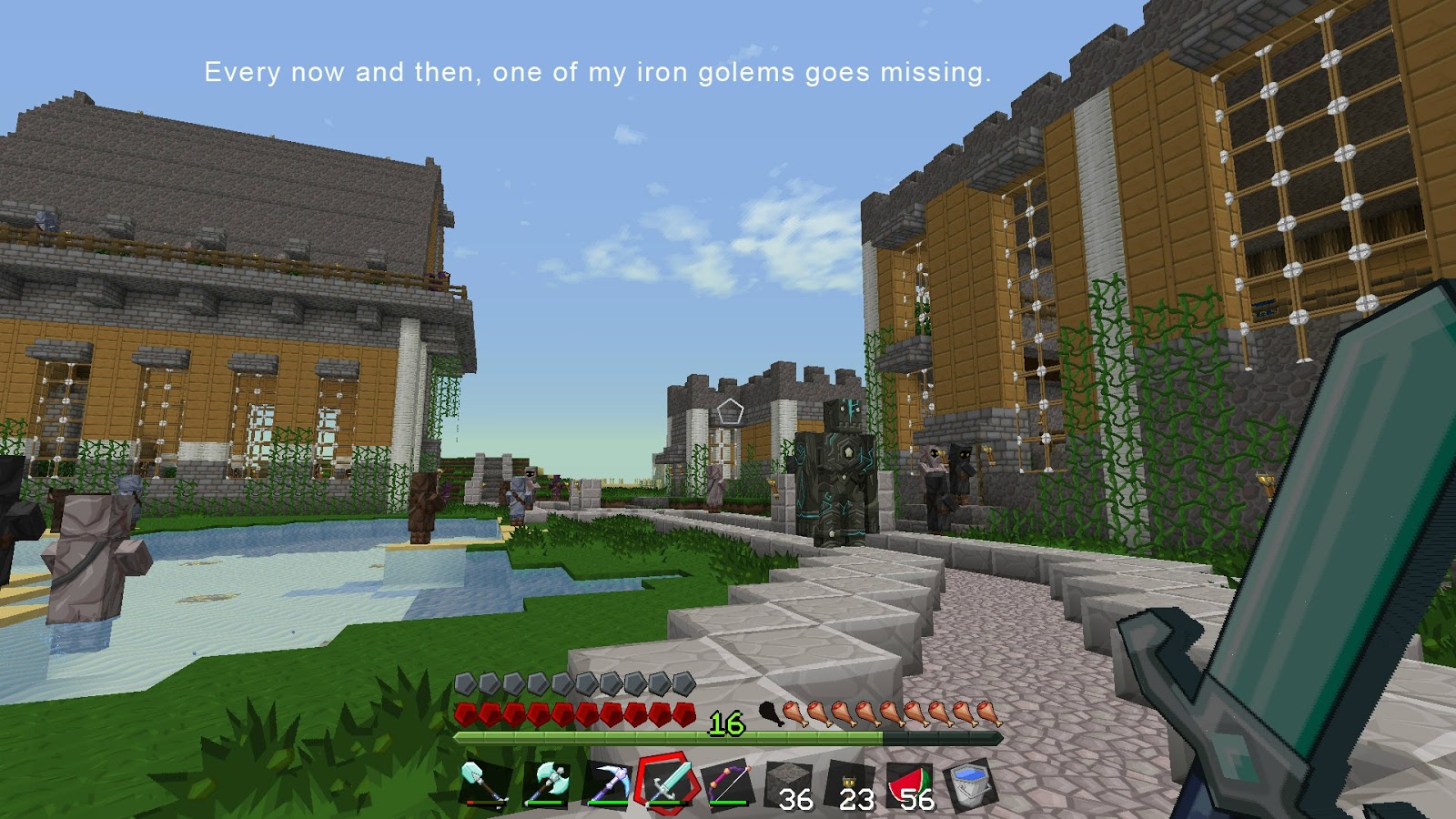
When I saw the first one, I ran inside to grab a fishing pole to try to fish it out. Just as I got him out, I noticed the second one, farther in. When I swam down to check him out, I found the whole group of them. I was taken back for a few seconds, completely speechless. It was almost like they wanted to be down there.
I honestly don’t know what I should do with them, now. I figure I could drain the area around them, excavate them, and then build a fence to keep them contained, but I think that might be even worse. Immortality is probably not all it’s cracked up to be. Eventually, you just want to rest, I imagine.
Then I started wandering off on mental tangents about pathfinding code. This game is definitely more than the sum of its parts.


157 You make me want to be a better person
You make me want to be a better person. And I’m not sure I want to be a better person.
156 Shun y Mime
Mime - ¿Por qué insiste en pelear?, ¿Por qué Andrómeda?
Shun - Ya te lo he dicho, debo rescatar a Atena y proteger esta tierra.
Mime - ¿acaso crees que podrás proteger a esta pobre y miserable tierra? ¿Crees que esta tierra merece que apueste tu pobre vida? ¿O crees que llegará el momento en que haya paz sin pelear y sin delitos? Acaso lo crees? Piénsalo.
Shun - Este sujeto es distinto a aquellos con los que he combatido. Lee todo lo que hay en mi mente.
Mime - Tú has herido a muchas personas en la guerra de las 12 casas, Andrómeda. Y tú también resultaste herido. Y ¿Qué fue lo que conseguiste? Sólo otra pelea.
Shun - Es cierto. Me pregunto cuántas personas habré de lastimar. La justicia no es una excusa. Lo cierto es que hiero a muchas personas. Incluyendo a algunos de mis amigos. Seiya, Saori ¿es verdad?. ¿Será cierto lo que me dijo Mime el resultado de una pelea es otra pelea? La paz no llegará aún cuando nos esforcemos. Dímelo, Seiya. Saori. Shiryu. Hyoga. ¿Por qué? ¿Por qué no hablan? ¿Por qué pelean?
Mime - Andrómeda, creo que podrás dejar de pelear sólo cuando hayas muerto.
Ikki - Shun, no hay respuesta.
Mime - ¿Qué es este cosmos?.
Shun - Hermano!
Ikki - Lo único que podemos hacer es confiar en nuestro futuro. Es muy difícil lo sé. Pero nada habrá de quedar si renunciamos a todo pensando así. De eso estoy seguro. Nuestra lucha no será inútil. Mantente firme Shun, todo terminará si te rindes ahora.
Shun - Aún no logro entenderlo, pero creo en lo que creo mi hermano. Bien Mime, te venceré! Prepárate para luchar conmigo!
Saint Seiya
155 Orfeo y Eurídice
Orfeo - Eurídice te amo, incluso aquí en el infierno. Créeme Eurídice, te amo. Aunque tuve que traicionar a Atena, deseaba tu alma de regreso. Esa es la verdad. Sin embargo, cuando una flor muere nunca vuelve a florecer, la gente, las aves, los insectos, incluso las estrellas que brillan intensamente, la vida ocurre solamente una vez. Por eso es tan hermosa y preciada. Comprendes Eurídice, estaba equivocado al querer traer a alguien de la muerte. Me equivoque al desear tal cosa.
Eurídice - Orfeo.
Orfeo - Eurídice.
Eurídice - Te agradezco lo que has hecho por mí, las melodías que tocaste todo este tiempo. Gracias a tu lira pude seguir viviendo incluso en este estado. Pero ya es suficiente.
Orfeo - Eurídice.
Eurídice - Orfeo. Adios. Y muchas gracias. Adios.
Saint Seiya
154 Manigoldo y Sage
Manigoldo - Dónde estoy? Qué es este lugar?
* Se ve una fila de cadáveres caminando hacia un precipicio. *
Manigoldo - No! Deténganse! Qué es lo que les pasa?
Sage - La muerte. Hay tantas muertes en nuestro mundo que llenan estas filas infinitas.
Manigoldo - Dime una cosa, ¿encuentran la paz al caer ahí?
Sage - Jamás. Abajo su único destino es el inframundo. Mejor dicho el Infierno.
Manigoldo - ¿Infierno? No puede ser! Quizá sufrieron mucho al momento de su muerte. Y al parecer aún lo hacen. Pero ¿tienen que sufrir por toda la eternidad? No te quedes ahí patriarca, haz algo! ¿No podemos deternerlos? ¿No podemos detener esas líneas?
* Se avienta para intentar detener una joven que está por caer. Y cae con ella lográndose sostener apenas del borde. *
Sage - Manigoldo. Suéltala ya, déjala ir.
Manigoldo - pero…
Sage - De todos modos ella ya está muerta. Aunque la salves de esa fosa no vivirá.
Manigoldo - Pero, sufrirá más si cae ahí, patriarca. Sufrió al morir, estoy seguro. Pero no permitiré que lo haga eternamente. No voy a permitirlo.
Sage - Déjala ya, Manigoldo.
Manigoldo - ¿Qué sentido tiene vivir entonces? ¿Todo mi pueblo sufrirá igual? Si es así como termina la vida, entonces ¿todo mi pueblo sufrirá igual? Si termina así la vida, entonces ¿qué sentido tiene convertirme en caballero?
* Cae la joven. *
Manigoldo - Sólo siento una profunda angustia.
Sage - Una profunda angustia. No lo des por hecho así nada más. Respóndeme esto, ¿ya olvidaste la razón por la cual te traje al santuario?. No fue porque quisiera enseñarte sobre la angustia o desesperanza en el campo de batalla.
* Sube a Manigoldo. *
Sage - Fue para que pudieras vivir, Manigoldo.
Manigoldo - No entiendo nada, ¿cómo podré vivir después de lo que he visto?
Sage - Por esa razón luchamos contra el dios Hades, aquel que reina el inframundo. Y contra todos aquellos que tratan a los humanos como si fueran simples peones. Por eso debes sentir esa vida, Manigoldo, y el universo que hay en ella. No dejes de sentirla y valorarla. Y así derrotaremos a la muerte misma.
* De vuelta al campo de batalla contra Tanathos. *
Sage - ¿Angustiante? No uses esa palabra tan a la ligera. Aún hay esperanza.
Manigoldo - Ahora comprendo maestro, tienes toda mi confianza.
153 I think I'm afraid of being happy
I think I'm afraid of being happy because whenever I get too happy something bad always happens.
Charlie Brown
Charlie Brown
152 Five steps to control the ego
Five steps to control the ego:
1. Don't get easily offended,
2. Free yourself from the need to win,
3. Free yourself from the need to always be right
4. Free yourself from the need to be superior
5. Free yourself from the need to have more.
Contodalactitud
Source: https://twitter.com/contodalactitud/status/198113367062364160
1. Don't get easily offended,
2. Free yourself from the need to win,
3. Free yourself from the need to always be right
4. Free yourself from the need to be superior
5. Free yourself from the need to have more.
Contodalactitud
Source: https://twitter.com/contodalactitud/status/198113367062364160
151 I know that I shall never
I know. I know that I shall never again meet anything or anybody who will inspire me with passion. You know, it's quite a job starting to love somebody. You have to have energy, generosity, blindness. There is even a moment, in the very beginning, when you have to jump across a precipice: if you think about it you don't do it. I know I'll never jump again.
Jean-Paul Sartre
Jean-Paul Sartre

149 Butters on sadness
Well yeah, and I’m sad, but at the same time I’m really happy that something could make me feel that sad. It’s like, it makes me feel alive, you know? It makes me feel human. And the only way I could feel this sad now is if I felt somethin’ really good before. So I have to take the bad with the good, so I guess what I’m feelin’ is like a, beautiful sadness. I guess that sounds stupid.
Butter, South Park
Butter, South Park
148 All I want to do
All I want to do is sit down for ten minutes and not worry about a single, damn, thing.
147 God doesn't hate us
God doesn’t hate us. But God could be disappointed in us — like children.
Ridley Scott
Ridley Scott

Subscribe to:
Posts (Atom)